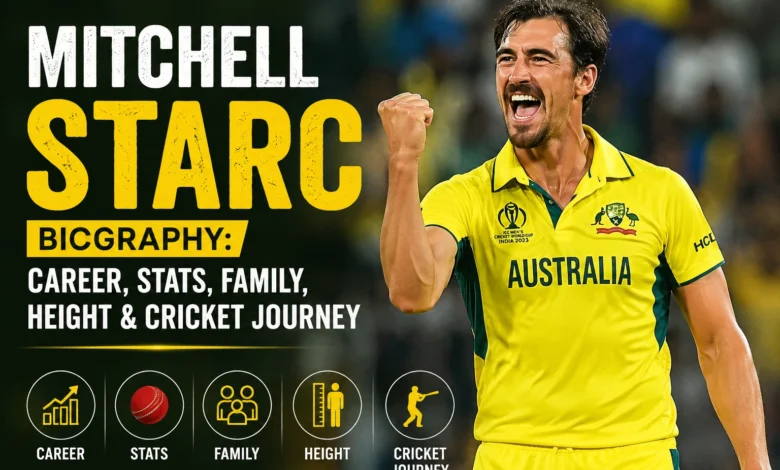
The ball began outside the right-hander’s eyeline before curving violently through the air.
For a fraction of a second, the batter believed he had left enough room. Then the late swing arrived. The off stump disappeared, the crowd erupted, and Mitchell Starc sprinted away with arms outstretched—another reminder that even in an era dominated by power-hitting, genuine pace combined with late swing remains one of cricket’s greatest weapons.
That moment has been repeated countless times throughout Starc’s career.
Whether dismantling top orders in World Cups, producing match-winning spells in the Ashes, or delivering yorkers under immense pressure in T20 cricket, Starc has built a reputation as one of the most feared left-arm fast bowlers of the modern era.
Unlike many Australian quicks who relied primarily on relentless accuracy, Starc brought something different. He attacked the stumps, searched for wickets rather than containment, and consistently backed his ability to swing the ball at speeds exceeding 145 km/h.
Across more than a decade in international cricket, he has become one of Australia’s defining fast bowlers—helping his country win ICC trophies, dominate Test cricket, and produce some of the most memorable spells of the 21st century.
Quick Facts
- Full Name: Mitchell Aaron Starc
- Born: 30 January 1990
- Birthplace: Baulkham Hills, New South Wales, Australia
- Nationality: Australian
- Role: Fast Bowler
- Batting Style: Left-handed
- Bowling Style: Left-arm fast
- International Debut: 2010 (ODI)
- Domestic Team: New South Wales
- BBL Team: Sydney Sixers
- Spouse: Alyssa Healy
Mitchell Starc Biography at a Glance
| Category | Details |
| Full Name | Mitchell Aaron Starc |
| Date of Birth | 30 January 1990 |
| Birthplace | Baulkham Hills, New South Wales, Australia |
| Height | 1.97 m (6 ft 6 in) |
| Batting Style | Left-handed |
| Bowling Style | Left-arm fast |
| Primary Role | Fast Bowler |
| Nickname | Starcy |
| International Debut | 2010 (ODI vs India) |
| Domestic Team | New South Wales |
| BBL Team | Sydney Sixers |
Early Life and Family Background
Mitchell Starc was born on 30 January 1990 in Baulkham Hills, a suburb in western Sydney.
Sport was central to the Starc household. Mitchell grew up in a family that encouraged competition and discipline, qualities that would later define his cricket career. His younger brother, Brandon Starc, pursued athletics instead of cricket and went on to become an international high jumper, representing Australia at multiple Olympic Games.
Mitchell’s first sporting passion was not necessarily fast bowling. Like many Australian youngsters, he played a variety of sports before gradually focusing on cricket. His height and natural athleticism made him stand out early, but coaches were equally impressed by his coordination and willingness to learn.
Initially, Starc trained as a wicketkeeper-batter. It was only during his teenage years that coaches recognised his extraordinary potential as a left-arm fast bowler. That decision would change the course of Australian cricket.
Learning the Craft
Few bowlers arrive fully formed.
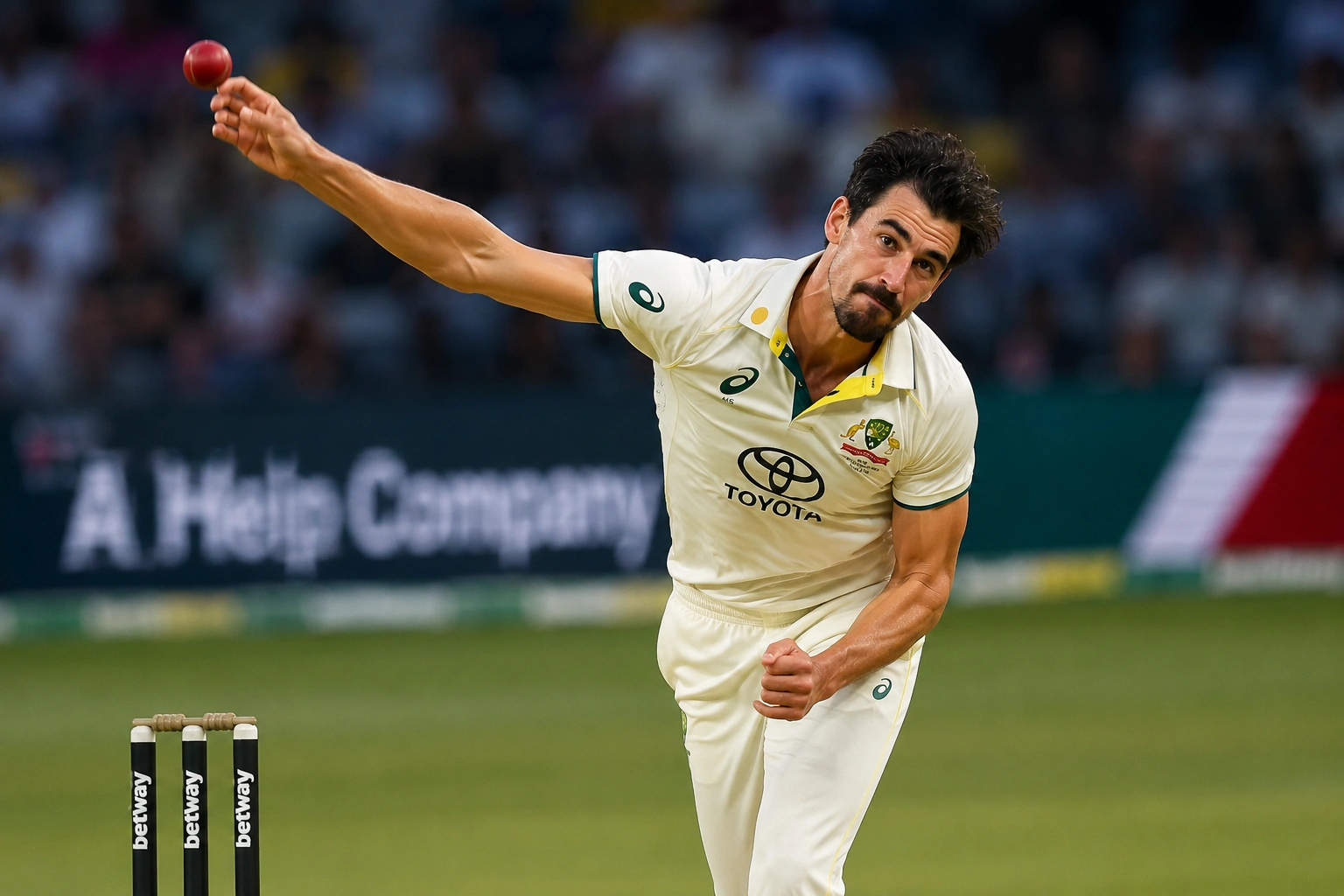
For Starc, the early years were spent refining a bowling action capable of generating both pace and swing without sacrificing control.
Bowling left-arm pace is already a rare skill. Combining it with late inswing at high speed is even rarer.
As his frame developed, Starc began extracting awkward bounce from Australian pitches while also mastering the inswinging yorker that would later become his trademark in white-ball cricket.
The challenge was consistency.
Young fast bowlers often struggle with rhythm, and Starc was no exception. There were days when his pace thrilled coaches but his control deserted him. Rather than reducing his aggression, his coaches encouraged him to keep attacking the stumps.
That philosophy would become one of the defining features of his career.
Rise Through Domestic Cricket
Starc progressed through New South Wales’ highly competitive cricket system, one of Australia’s most productive talent pathways.
Breaking into the Blues was never straightforward.
The state regularly featured international fast bowlers, meaning every opportunity had to be earned.
Starc made his First-Class debut for New South Wales during the 2009–10 season, immediately attracting attention with his pace and ability to reverse swing the older ball.
Selectors recognised not only his wicket-taking ability but also his willingness to bowl long spells—an essential quality for Test cricket.
Strong performances in domestic one-day cricket further strengthened his credentials.
Sheffield Shield Development
The Sheffield Shield has traditionally served as Australia’s finishing school for fast bowlers.
For Starc, it provided invaluable lessons.
Experienced batters punished loose deliveries, forcing him to improve his control while maintaining his attacking instincts.
He also developed an effective partnership with wicketkeeper Brad Haddin, whose advice behind the stumps helped accelerate Starc’s tactical understanding.
By the end of his early domestic seasons, Starc had become one of Australia’s most exciting pace prospects.
Breaking into the Australian Team
Mitchell Starc made his One-Day International debut against India at Visakhapatnam on 20 October 2010.
International cricket immediately exposed areas requiring improvement.
His pace was unquestioned, but experienced batters occasionally capitalised on inconsistency in line and length.
Australia’s selectors, however, remained patient.
Left-arm fast bowlers capable of swinging the new ball at genuine pace are exceptionally rare. Rather than judging Starc solely by early results, they invested in his long-term development.
The decision proved wise.
Within two years, Starc had become a regular member of Australia’s pace attack across formats.
Early Test Career
Starc earned his Test debut against New Zealand in December 2011 at the Gabba.
Taking wickets in Test cricket demanded greater patience than limited-overs matches.
He gradually learned when to attack with fuller deliveries and when to use short-pitched bowling to create opportunities.
Working alongside experienced fast bowlers such as Peter Siddle, Ryan Harris, and later Josh Hazlewood, Starc refined his craft while maintaining his natural attacking style.
The Making of a Match Winner
By the early stages of the 2013 Ashes cycle, Australia recognised they possessed something special.
Starc was no longer simply a fast bowler capable of producing spectacular deliveries.
He had become the strike bowler entrusted with breaking partnerships, taking wickets with the new ball, and delivering decisive spells when matches demanded inspiration.
His ability to swing the ball late at extreme pace made him uniquely difficult to face.
Unlike many fast bowlers who targeted defensive lines, Starc hunted wickets relentlessly.
That mindset would soon make him one of the world’s premier bowlers—and a central figure in Australia’s most successful era of white-ball cricket.
International Career Timeline: Becoming Australia’s Strike Bowler
By the middle of the 2010s, Mitchell Starc had evolved from a promising left-arm quick into one of the most feared fast bowlers in world cricket.
His pace regularly exceeded 145 km/h, his inswinging yorker became a trademark, and his ability to produce breakthroughs with the new ball transformed Australia’s bowling attack. Alongside Josh Hazlewood, Pat Cummins, and previously Ryan Harris, Starc formed one of the strongest pace units of the modern era.
International Career Timeline
| Year | Milestone |
| 2010 | ODI debut against India at Visakhapatnam. |
| 2011 | Test debut against New Zealand at Brisbane. |
| 2012 | T20I debut against Pakistan. |
| 2013–14 | Played a major role in Australia’s 5–0 Ashes whitewash. |
| 2015 | ICC Cricket World Cup winner and Player of the Tournament. |
| 2017 | Reached 100 Test wickets. |
| 2019 | Finished as the leading wicket-taker in the ICC Cricket World Cup. |
| 2021 | ICC Men’s T20 World Cup winner. |
| 2023 | ICC World Test Championship winner. |
| 2023 | ICC Cricket World Cup winner in India. |
| 2025 | Played a key role in Australia’s ICC World Test Championship triumph over South Africa. |
| 2026 | Continued as one of Australia’s senior fast bowlers across formats. |
Few fast bowlers have maintained elite performances across all three formats for such a prolonged period.

World Cup Heroics
Mitchell Starc’s reputation is built not only on longevity but on his extraordinary performances in ICC tournaments.
2015 Cricket World Cup
Playing on home soil, Starc delivered one of the greatest bowling campaigns in World Cup history.
His combination of express pace and late swing dismantled batting line-ups throughout the tournament, earning him Player of the Tournament as Australia lifted the trophy.
The opening delivery that bowled New Zealand captain Brendon McCullum in the final remains one of the defining moments of the tournament.
2019 Cricket World Cup
Four years later, Starc was even more prolific.
He finished with 27 wickets, setting a new record for the most wickets in a single men’s ODI World Cup.
Although Australia were eliminated in the semi-finals, Starc’s individual campaign remains one of the finest by any fast bowler in World Cup history.
Ashes Specialist
Some players thrive against particular opponents.
For Mitchell Starc, England has often brought out his very best.
Across multiple Ashes series, his pace, reverse swing, and ability to attack the stumps have repeatedly troubled England’s top order.
His performances during the 2013–14, 2017–18, and 2021–22 Ashes victories cemented his status as one of Australia’s great Ashes fast bowlers.
Playing Style: Fast, Aggressive, Relentless
Mitchell Starc represents a different school of fast bowling.
Rather than prioritising economy, he hunts wickets.
That philosophy influences every aspect of his game.
Bowling Strengths
- Late inswing at high pace.
- Devastating yorkers.
- Reverse swing with the old ball.
- Sharp bouncer.
- Ability to attack both right- and left-handed batters.
Few bowlers combine speed, swing, bounce, and accuracy as effectively.
Technical Analysis
New Ball
Starc’s greatest weapon remains the inswinger to right-handed batters.
Beginning outside off stump before curving late into the pads or stumps, it forces uncertainty even among elite players.
Reverse Swing
With an older ball, Starc generates reverse swing through a strong wrist position and high release point.
This has produced countless match-winning spells in Test cricket.
Yorkers
Few modern bowlers execute yorkers more consistently.
His full-length deliveries have been particularly effective in ODIs, T20Is, and the IPL.
Lower-Order Batting
Although selected primarily as a bowler, Starc has contributed several valuable innings.
His clean hitting and willingness to attack make him one of Australia’s more dangerous lower-order batters.
Mitchell Starc Career Statistics
Statistics below reflect career records approximately current to July 2026. Because Mitchell Starc remains an active international cricketer, exact figures should be verified against the latest Cricket Australia or ICC records before publication.
| Format | Matches* | Runs* | Bat Avg* | Wickets* | Bowl Avg* | Best Bowling | 5WI* |
| Tests | 100+ | 2,200+ | 20+ | 400+ | 27+ | 6/48 | 15+ |
| ODIs | 130+ | 600+ | 11+ | 260+ | 23+ | 6/28 | 9+ |
| T20Is | 70+ | 100+ | 10+ | 80+ | 23+ | 4/20 | 0 |
| IPL | 50+ | 100+ | 12+ | 65+ | 23+ | 5/35 | 1 |
*Active career totals continue to change and should be verified before publication.
IPL and Franchise Career
Despite being one of the world’s premier fast bowlers, Mitchell Starc spent several IPL seasons prioritising international cricket.
He represented:
- Royal Challengers Bangalore
- Kolkata Knight Riders
- Delhi Capitals
His return to the IPL after a lengthy absence attracted significant attention, particularly after becoming one of the most expensive players in auction history.
Starc has also featured in Australia’s domestic Big Bash League, representing the Sydney Sixers, although international commitments have limited his appearances.
Personal Life
Away from cricket, Mitchell Starc is known for maintaining a relatively private lifestyle.
Despite his status as one of Australia’s most recognisable athletes, he has largely avoided unnecessary publicity, preferring to focus on cricket and family.
His marriage to Australian women’s cricket legend Alyssa Healy has made them one of the sport’s most celebrated couples.
How Tall Is Mitchell Starc?
Standing at 1.97 metres (6 feet 6 inches), Starc generates steep bounce in addition to pace and swing.
Physical Profile
| Category | Details |
| Height | 1.97 m (6 ft 6 in) |
| Weight | Approximately 92 kg [VERIFY latest public figure] |
| Batting Style | Left-handed |
| Bowling Style | Left-arm fast |
| Primary Role | Fast Bowler |
| Bowling Speed | Frequently 145–155 km/h |
Family
Cricket and elite sport run through the Starc family.
| Relation | Name | Profession / Detail |
| Father | Paul Starc | Property business |
| Mother | Judy Starc | Former representative netball player |
| Brother | Brandon Starc | Australian Olympic high jumper |
| Spouse | Alyssa Healy | Australian international cricketer |
| Children | None publicly reported (as of July 2026) |
Health and Fitness Journey
Fast bowling places extraordinary demands on the body, and Starc’s career has included several injury setbacks.
| Injury / Health Event | Year | Impact | Recovery |
| Stress fracture (foot) | 2015 | Missed cricket after Ashes | Returned before 2016 season |
| Foot injury | 2018 | Missed parts of international calendar | Successful rehabilitation |
| Finger injury | 2023 | Managed workload | Returned during international season |
| General workload management | Ongoing | Rotation across formats | Continues at elite level |
Records and Achievements
Mitchell Starc has accumulated one of the finest résumés among modern fast bowlers.
| Achievement | Details |
| ICC Cricket World Cup Winner | 2015, 2023 |
| ICC Men’s T20 World Cup Winner | 2021 |
| ICC World Test Championship Winner | 2023, 2025 |
| ICC Cricket World Cup Player of the Tournament | 2015 |
| Most wickets in a single Men’s Cricket World Cup | 27 (2019) |
| 400+ Test wickets | Yes |
| Multiple Ashes series winner | Yes |
Challenges and Criticism
Early in his career, critics questioned Starc’s consistency.
His pace was undeniable, but control occasionally deserted him.
Rather than sacrificing aggression, Starc refined his rhythm and bowling action while retaining his attacking mindset.
Injuries also interrupted several seasons, particularly stress fractures and foot problems that affected many fast bowlers of his generation.
Despite those setbacks, he repeatedly returned to world-class form—a testament to his fitness, resilience, and professionalism.
Did You Know?
Mitchell Starc originally trained as a wicketkeeper before coaches realised his exceptional potential as a fast bowler. Had that transition never occurred, cricket might never have witnessed one of the greatest left-arm pace careers of the modern era.
Legacy and Current Status (As of July 2026)
Mitchell Starc’s legacy cannot be measured solely by wickets.
Numbers tell an impressive story—hundreds of international wickets, multiple ICC trophies, Ashes victories, and match-winning spells across every format. Yet statistics alone fail to capture what made Starc different from many of his contemporaries.
He changed the way captains used left-arm fast bowling.
For decades, left-arm quicks were often valued for creating rough outside the right-hander’s off stump or adding variety to an attack. Starc expanded that role. He became Australia’s primary strike bowler, trusted to take the new ball, reverse the old one, deliver yorkers at the death, and produce breakthroughs whenever matches drifted.
Few bowlers in modern cricket have influenced ICC tournaments as profoundly.
His performances in the 2015 ICC Cricket World Cup, where he finished as Player of the Tournament, remain among the greatest fast-bowling campaigns ever seen. Four years later, he returned to claim 27 wickets at the 2019 World Cup, setting the record for the most wickets in a single men’s ODI World Cup edition. Even though Australia fell short of the title, Starc’s individual brilliance reinforced his reputation as cricket’s premier tournament fast bowler.
His contribution to Australia’s golden era extended beyond white-ball cricket.
Alongside Pat Cummins, Josh Hazlewood, Nathan Lyon, and earlier Ryan Harris, Starc formed the backbone of one of Australia’s finest pace attacks. Their combined success helped Australia regain the Ashes, win the 2021 ICC Men’s T20 World Cup, the 2023 ICC World Test Championship, the 2023 ICC Cricket World Cup, and the 2025 ICC World Test Championship, cementing one of the most successful periods in Australian cricket history.
Equally important has been his adaptability.
Fast bowlers often lose effectiveness as they age, relying increasingly on experience rather than pace. Starc has evolved differently. While still capable of bowling above 145 km/h, he has added greater tactical awareness, improved slower deliveries, and become even more effective at setting batters up across multiple overs.
As of July 2026, Starc remains one of Australia’s senior leaders and one of the first names considered whenever Australia plays a major Test series or ICC event. Although workload management has become increasingly important, his ability to produce decisive spells ensures he continues to occupy a unique place within Australian cricket.
Mitchell Starc Among Australia’s Greatest Fast Bowlers
Comparisons across eras are always subjective, but Starc’s achievements place him comfortably among Australia’s elite pace bowlers.
Alongside legends such as Dennis Lillee, Glenn McGrath, Brett Lee, and Jeff Thomson, Starc has carved out his own identity—not through relentless accuracy alone, but through attacking swing bowling capable of changing matches in a matter of overs.
His combination of left-arm angle, high pace, reverse swing, and yorkers makes him one of the most complete fast bowlers Australia has produced.
Frequently Asked Questions (FAQs)
Who is Mitchell Starc?
Mitchell Starc is an Australian international cricketer who plays as a left-arm fast bowler. Since making his international debut in 2010, he has become one of Australia’s leading wicket-takers across Test, ODI, and T20I cricket while helping the team win multiple ICC tournaments.
How tall is Mitchell Starc?
Mitchell Starc stands 1.97 metres (6 feet 6 inches) tall. His height enables him to generate steep bounce in addition to express pace and late swing, making him particularly dangerous with both the new and old ball.
Who is Mitchell Starc’s wife?
Mitchell Starc is married to Alyssa Healy, one of Australia’s greatest wicketkeeper-batters and captains. The couple married in 2016 after first meeting through junior cricket in New South Wales.
What is Mitchell Starc’s fastest recorded delivery?
Mitchell Starc has regularly exceeded 155 km/h during his international career. His officially recorded fastest delivery is approximately 160.4 km/h against New Zealand in the second Test at Perth in 2015, placing him among the fastest bowlers in cricket history.
How many World Cups has Mitchell Starc won?
As of July 2026, Mitchell Starc has won:
- ICC Cricket World Cup: 2015 and 2023
- ICC Men’s T20 World Cup: 2021
- ICC World Test Championship: 2023 and 2025
These achievements make him one of Australia’s most decorated modern cricketers.
Which IPL teams has Mitchell Starc played for?
Mitchell Starc has represented:
- Royal Challengers Bangalore
- Kolkata Knight Riders
- Delhi Capitals
He has also represented the Sydney Sixers in Australia’s Big Bash League when international commitments permitted.
Why is Mitchell Starc regarded as one of the world’s best fast bowlers?
Starc combines extreme pace, late swing, reverse swing, devastating yorkers, and an aggressive wicket-taking mindset. His outstanding record in ICC tournaments, particularly World Cups, separates him from many other elite fast bowlers of his era.
Career at a Glance
| Category | Summary |
| International Debut | 2010 (ODI) |
| Test Debut | 2011 |
| Primary Role | Left-arm Fast Bowler |
| Batting Style | Left-handed |
| Bowling Style | Left-arm Fast |
| World Cup Titles | 2 ODI, 1 T20I |
| World Test Championship Titles | 2 |
| World Cup Player of the Tournament | 2015 |
| Fastest Recorded Delivery | 160.4 km/h |
| Domestic Team | New South Wales |
| BBL Team | Sydney Sixers |
Did You Know?
Mitchell Starc and Alyssa Healy are one of the few married couples in international cricket history to have each won multiple ICC World Cup titles while representing Australia. Together, they have contributed significantly to one of the country’s most successful eras across both men’s and women’s cricket.
Final Assessment
Mitchell Starc’s career has been defined by moments that changed matches.
There was the inswinging yorker that shattered stumps before batters could react. The devastating opening spell that broke the back of a World Cup final. The reverse-swing burst that turned a Test match in Australia’s favour. Time and again, when Australia needed a breakthrough, Starc delivered.
His greatness lies not simply in his wicket tally but in the quality of those wickets. He has consistently dismissed the world’s best batters in the biggest tournaments, often under the greatest pressure.
Every generation produces outstanding fast bowlers. Very few become synonymous with an era.
For Australian cricket, Mitchell Starc belongs in that rare category.
His influence extends beyond records and trophies. He inspired a new generation of left-arm fast bowlers, proved that aggressive swing bowling could still dominate in an age of power-hitting, and reminded cricket that the sight of an off stump cartwheeling through the air remains one of the sport’s most thrilling moments.
Whether remembered for his World Cup heroics, his Ashes performances, or his relentless pursuit of wickets, Mitchell Starc has already secured his place among the finest fast bowlers Australia—and world cricket—have ever produced.